Questions to Ask Before a Land Clearing Estimate
Home › Blog › Questions to Ask Before a Land Clearing Estimate
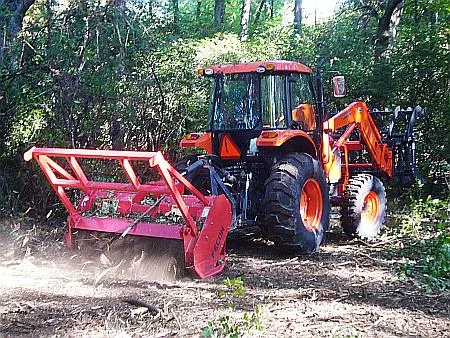
Before you approve a land clearing estimate, these are the questions you should have clear answers to.
What exactly is being removed?
Land clearing estimates should begin with a removal list and a marked boundary. Name the vegetation, trees, stumps, roots, brush, debris, or other items you expect us to address — then name what stays. A broad phrase like 'clear the lot' can hide significant differences in expectations, and those gaps surface at the worst possible time.
Establish property lines and identify private utilities, septic components, drainage features, fences, roads, planted areas, and neighboring improvements. Disclose known buried material or previous site use. If a critical feature can't be confidently located, resolve it before work begins.
We treat land clearing and grubbing as scope-by-scope support separate from our core services. That means the first review may show that forestry mulching or brush removal is actually the better fit — or that part of the request belongs with another provider. An honest estimate should reflect the work that actually fits.
Where will the material go?
Removed or processed material needs a destination. Ask whether it will be mulched in place, consolidated in an agreed location, left where it falls, or handled another way. If hauling is expected, our estimate states what is hauled and where responsibility ends. Material doesn't disappear just because it's been removed from its original position.
The amount and type of material affects equipment, access, staging, and time. The site needs room for the agreed method without crossing an unapproved area. Gates, roads, overhead restrictions, slopes, soft conditions, nearby buildings, and occupied spaces may all influence whether the plan is practical.
Material decisions affect the next phase too. A pile placed conveniently for clearing may be inconvenient for fencing or another contractor. Tell us about future access and identify areas that must stay open. We're not adding unlisted work — we're helping avoid putting today's material in tomorrow's way.
What finish is included?
A clearing estimate should describe the condition at handoff. Removing vegetation doesn't automatically include final grading, compaction, drainage correction, topsoil, seeding, construction preparation, or a debris-free surface. Each of those expectations needs to be stated and confirmed — and some may require a different provider.
Grubbing creates more disturbance than forestry mulching. Roots or stumps that are removed can leave holes, loose soil, and mixed material. Ask how those areas are handled within the quoted scope. If the answer depends on conditions discovered during work, the estimate should explain how changes are communicated and approved before any additional work proceeds.
The words smooth and presentable apply to our forestry mulching outcome — a land-clearing finish may look different. Tie the description to the intended next use and the operations actually included.
What is outside the estimate?
Exclusions are just as important as inclusions. Ask us about hauling, disposal, burning, grading, compaction, drainage, utility work, permits, traffic control, erosion measures, and restoration. We won't claim services or regulatory responsibility that weren't reviewed — and you shouldn't assume a later trade is included just because it follows clearing.
Scheduling and weather expectations should be documented without promising a fixed outcome in unsuitable conditions. Tell us how access or ground conditions may affect the start, and what happens if the property isn't ready. Owner responsibilities for marking boundaries, locating private features, moving obstacles, and keeping people or animals clear of the work area should be confirmed.
Finally, ask how we review completion. A walkthrough against the marked boundary, removal list, material plan, and agreed finish gives both sides a practical closeout. If the project reveals a useful second phase, we'll estimate it separately — on its own terms.
Ready to talk through your property?
Tell us the location, the work area, how to reach it, and what you want the finished ground to look like. We'll take it from there.
Request an Estimate